

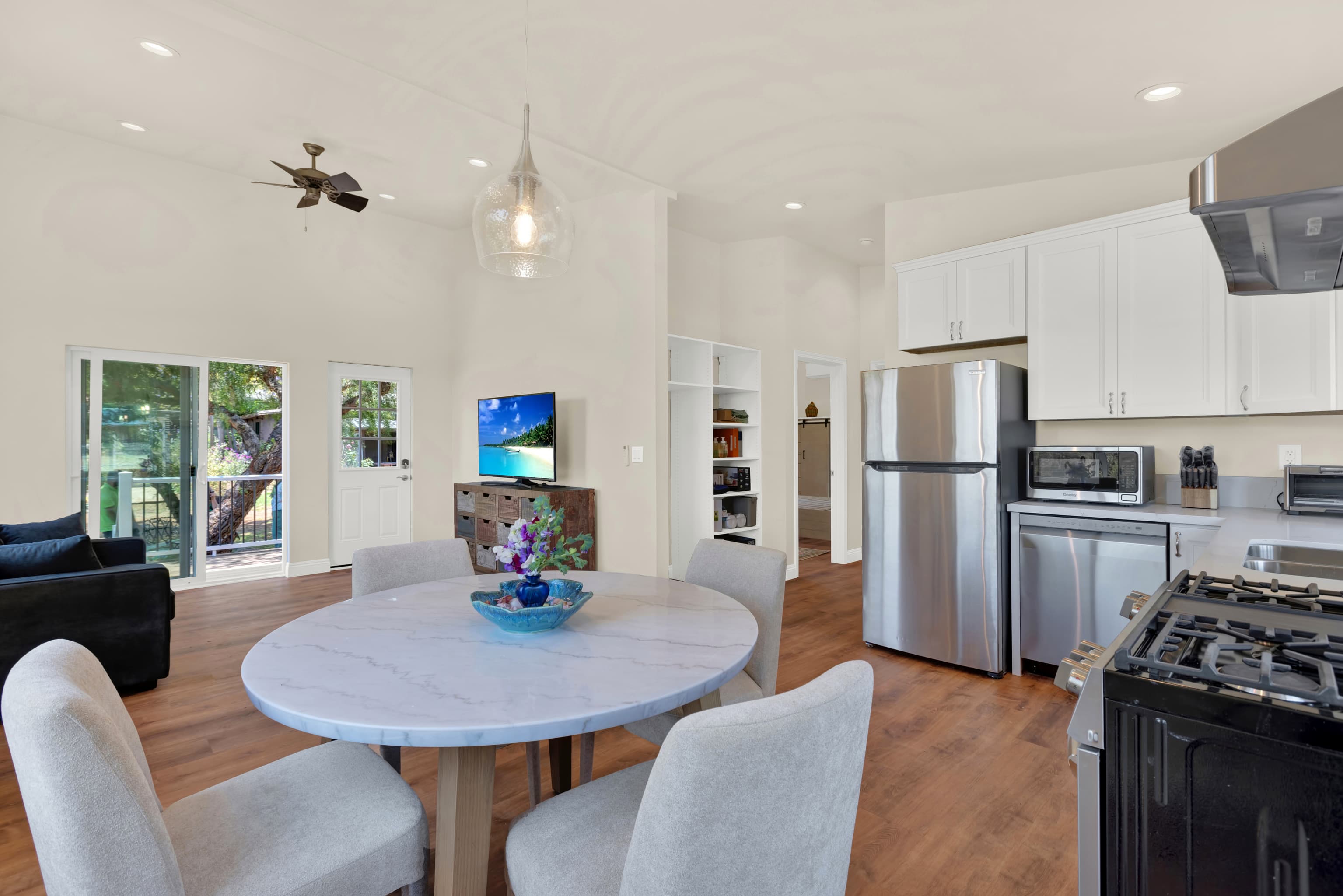
California law lets some homeowners sell an ADU as its own condo. Here is what AB 1033 allows, where it applies in San Diego, and what it really takes.
One of the most common questions we hear on a first site walk has quietly changed answers. For years, if a homeowner asked whether they could someday sell the ADU on its own, the answer was a flat no — the unit stayed tied to the main house forever. That is no longer universally true in California, and San Diego is one of the places where the door has opened.
It is worth understanding before you design, because a few decisions made early are much cheaper than the same decisions made later.
What AB 1033 Actually Changed
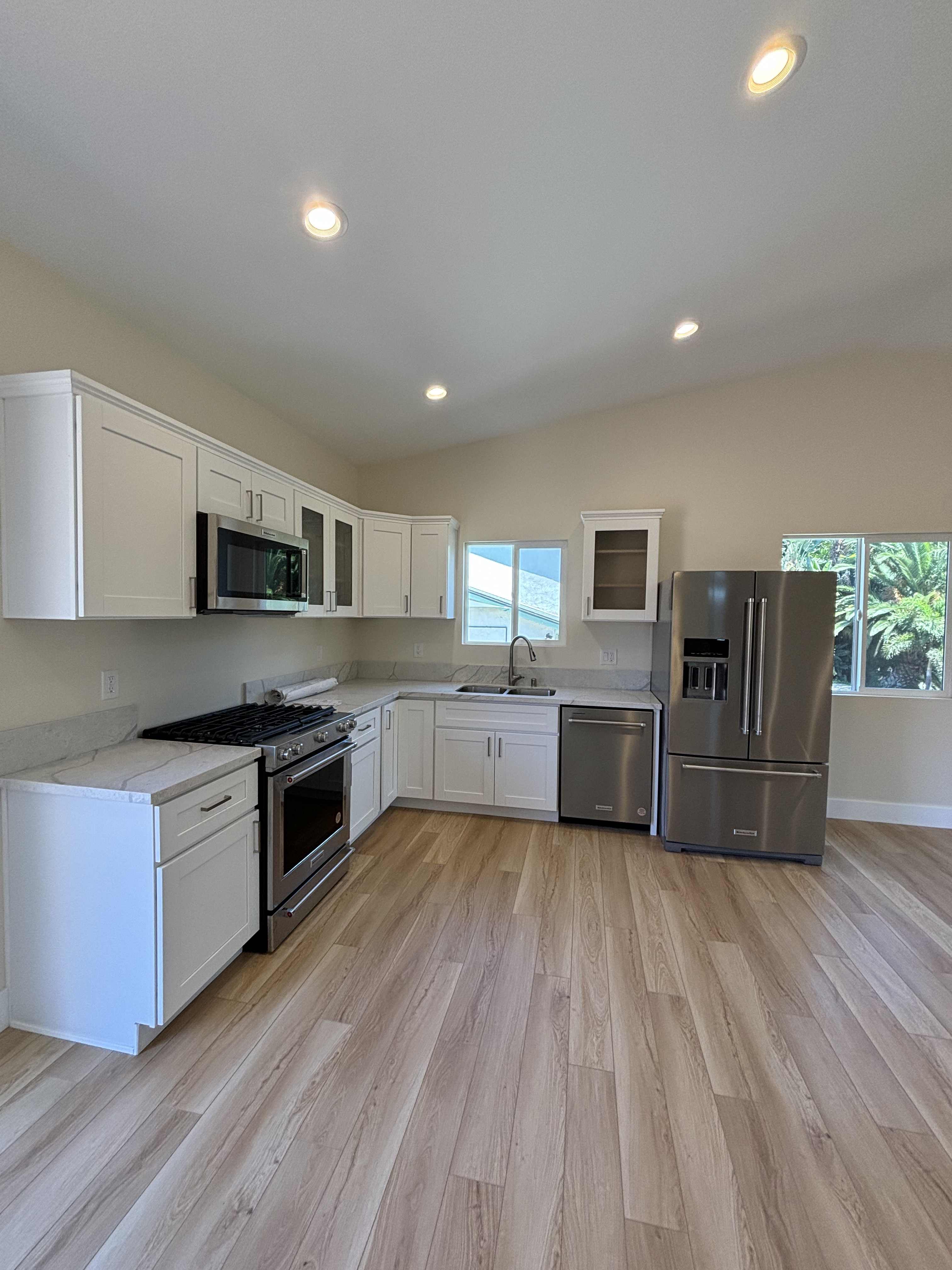
Assembly Bill 1033 gave California cities and counties the option to allow a primary home and an ADU on the same lot to be separated into condominium units and sold independently. The key word is option. As the text of AB 1033 on the California Legislature's site makes clear, a local agency "may" adopt such an ordinance — it is not a statewide right, and nothing happens automatically in a jurisdiction that has not opted in.
That is the single biggest misconception we run into. Building an ADU does not, by itself, create something sellable. Separate sale requires both a local ordinance permitting it and a real condominium conversion on your specific property.
Where Separate Sale Is Allowed Around San Diego
San Diego is unusually far along compared to most of the state. Only a small number of California jurisdictions have adopted separate-sale ordinances at all, and two of them are here.
The City of San Diego permits ADUs to be subdivided into condominiums and conveyed separately from the primary residence, with some meaningful limits. Per the city's ADU and JADU information bulletin:
- A junior ADU cannot be sold separately from the primary dwelling, full stop. If separate sale matters to you, a JADU is the wrong path.
- Deed-restricted affordable ADUs and units receiving housing assistance cannot be subdivided during their affordability period.
- When an ADU condominium is first listed, the owner must offer it for at least 30 days through publicly accessible real estate listings, with a disclosure that it is being offered to buyers who intend to live in it as their primary residence.
That last rule is a deliberate nudge toward owner-occupants rather than investors, and it is a good example of how local implementation adds texture the state law does not.
Unincorporated San Diego County adopted its own separate-sale program in 2026, allowing condominium conversion of ADUs in unincorporated communities, with the Board continuing to refine details around owner occupancy and protections for existing tenants. If your property is in an unincorporated area — much of Fallbrook, Ramona, Alpine, Valley Center, Bonsall — confirm the current requirements with County Planning & Development Services before you count on anything, because this one is still being tuned.
If you are in Carlsbad, Encinitas, Oceanside, Vista, or another incorporated city, the honest answer today is: check locally. Adoption is jurisdiction by jurisdiction, and a neighboring city's rules tell you nothing about yours.
What the Conversion Actually Requires
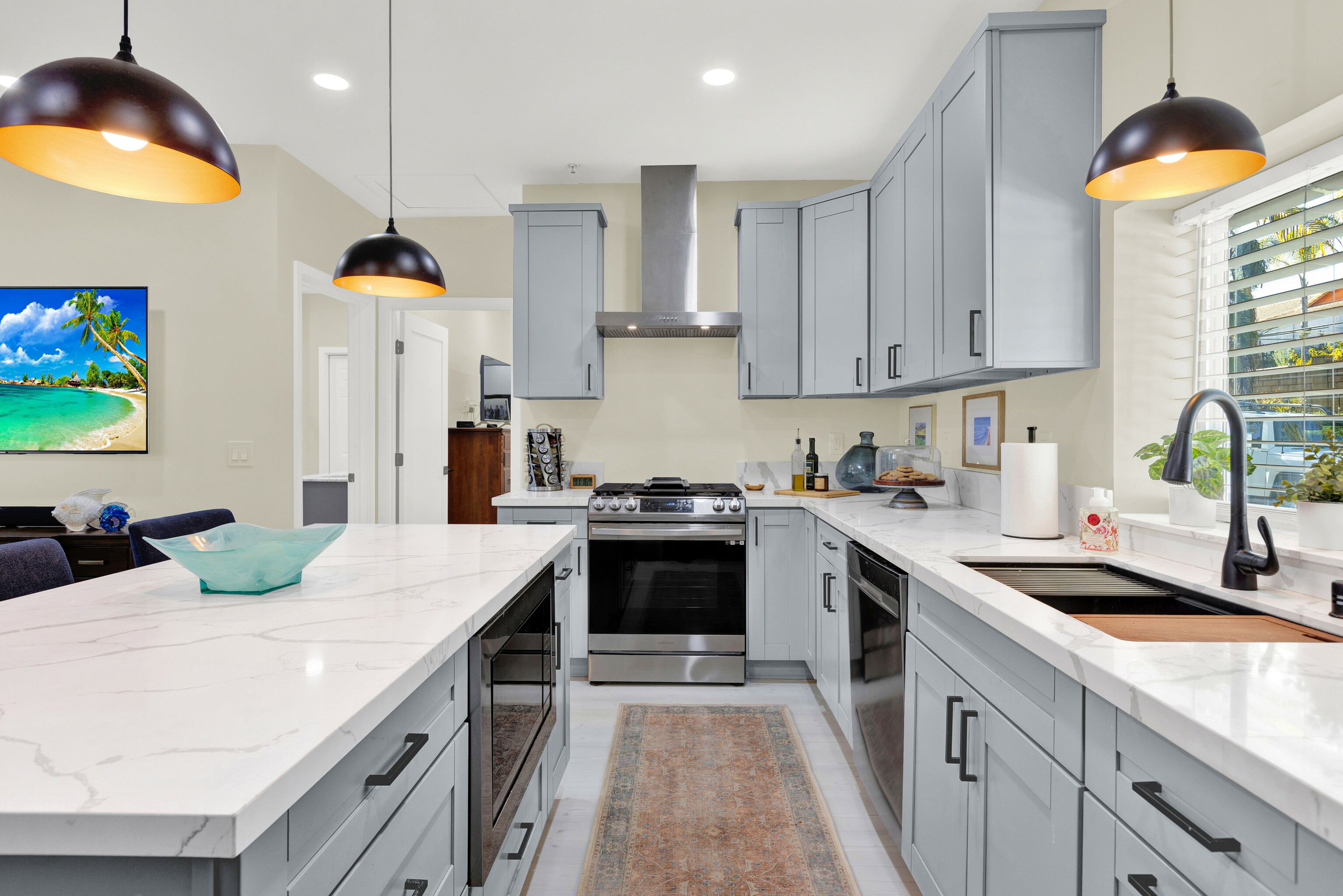
This is where enthusiasm meets paperwork. Creating a condominium out of a single-family lot is a real subdivision process, not a form you file at the end of construction.
Your lender has to agree — and can simply decline
This is the requirement that stops most projects, and it deserves to be understood plainly. Every lienholder on the property must give written consent before a condominium plan can be recorded. AB 1033 spells out that a lienholder may refuse consent, or condition it, at their sole and absolute discretion. Later modifications to the condominium plan require fresh consent, which can also be denied.
If you have a mortgage — and most people do — your ability to ever split the property runs through your lender's willingness. Ask early. A conversation with your loan servicer costs nothing and can save you from designing around an outcome that will never be approved.
Utilities and the condominium plan
A separately conveyed ADU needs to function as its own home, which means the utility picture has to be untangled. State law requires the homeowner to notify utility providers — water, sewer, gas, and electricity — of the condominium creation and separate conveyance.
Practically, this is the piece with the biggest design consequences. Running a separate sewer lateral, a dedicated water service, or a second electrical service is dramatically cheaper to rough in during construction than to retrofit into a finished, landscaped yard three years later. Even if you are not sure you will ever sell separately, roughing in the separation is often modest money for real optionality. We walk through exactly these trade-offs during our planning phase so the decision is made with numbers in front of you.
CC&Rs, HOAs, and ongoing governance
Condominiums in California are created under the Davis-Stirling Common Interest Development Act, which means recorded CC&Rs and a governing structure for the shared parts of the property — the driveway, the yard, the roof, the shared walls if attached. Two owners on one lot need written rules about who maintains what and who pays for it.
And if your property already sits inside a planned development with an existing homeowners association, AB 1033 requires the express written authorization of that association before a condominium plan can be recorded. An HOA can say no.
Who This Genuinely Makes Sense For
Separate sale is a powerful tool, but it is not the right goal for every project. In our experience it fits best when:
- You are building for a parent or adult child and want a path to eventually pass ownership cleanly rather than through a shared deed.
- You own the home free and clear, or have a lender you already know is flexible.
- You are thinking in decades, and want the flexibility to recapture equity later without selling the house you live in.
It is usually the wrong focus when the ADU is primarily a rental income play. Renting an ADU requires none of this — no lender consent, no parcel work, no CC&Rs. Most of our clients build for rental income or family, keep the property whole, and are perfectly happy. If income is your objective, the financing options and rent math matter far more than conveyance.
The Practical Move: Build for the Option, Decide Later
You do not have to choose today. The smart sequence is to design and permit a conventional ADU, make a deliberate call about utility separation and unit placement while the trenches are still open, and leave the condominium question for a future you with better information.
That means: detached rather than a junior ADU if separate sale is on the table, a floor plan and yard layout that could reasonably be divided, and separated utilities where the cost is sensible. None of that slows your permit down or complicates your build — it just keeps a door open.
California's Department of Housing and Community Development maintains an ADU Handbook, updated in 2026, that remains the best plain-language reference for what your city can and cannot require of you. It is worth a read before any conversation with a planner.
A quick note on scope: we are a construction management agency, not your attorney or your lender. A condominium conversion involves real estate law, title, and lending decisions that deserve professionals in those fields. What we can do is make sure the physical building and the permit path never become the reason an option closes.
If you are weighing an ADU in Carlsbad or anywhere in San Diego County and want to understand what your specific lot allows — including whether separate sale is realistic where you live — book a free site walk. We will look at setbacks, utilities, access, and slope with you, and tell you honestly which paths are open. You can also browse our pre-approved plan options if you would like to see what a faster permit route looks like.
The rules around ADUs keep loosening, and San Diego homeowners have more choices now than at any point in the last decade. The best time to think about them is before the concrete is poured.