

Built before 2020 without a permit? AB 2533 gives San Diego homeowners a clear path to legalize an unpermitted ADU or garage conversion. Here's how it works.
Plenty of San Diego homes come with a little mystery out back: a converted garage, a studio over the workshop, or a backyard cottage that a previous owner built without ever pulling a permit. For years, owners of these units faced an uncomfortable choice — keep quiet and hope, or invite scrutiny that could end in an order to tear it out.
California changed that. Under AB 2533, signed into law on September 28, 2024, homeowners have a defined path to legalize many unpermitted accessory dwelling units (ADUs) and junior ADUs (JADUs). If you've bought a home with an "as-is" unit, or you've been putting off dealing with one, here's what the law does and how the process works in the City of San Diego.
What AB 2533 Changes for Unpermitted ADUs
The core idea is simple: if an ADU or JADU was built without a building permit before January 1, 2020, the local agency can no longer refuse to permit it just because it doesn't match today's building standards. Instead, the focus shifts to health and safety.
The City of San Diego's Information Bulletin 242 on legalizing unpermitted ADUs spells this out. The City may deny a legalization permit only when correcting a violation is necessary to address a substandard condition — things that make a home genuinely unsafe or unhealthy, rather than technical code differences.
A few other homeowner-friendly pieces of the program:
- A confidential pre-inspection. You can hire a licensed design professional or general contractor to inspect the unit privately first, so you understand its condition and the likely scope of work before you apply.
- No construction & demolition debris deposit is required for these legalization permits in the City of San Diego.
- No water or sewer capacity fees apply under the City's program, though school districts may still assess their own fees.
Does Your Unit Qualify?
Before anything else, confirm two things: when the unit was built, and where it sits.
Proving the construction date
The pre-2020 cutoff is the heart of eligibility, so you'll need evidence. The City accepts documents such as:
- Contractor invoices or receipts
- Utility bills tied to the unit
- Lease agreements showing someone lived there
- Real estate disclosures or listing documents
- Dated photographs
- Prior code enforcement records
Start gathering these early. A previous owner's disclosure packet or an old rental agreement is often the strongest proof you have.
Situations that fall outside streamlined processing
In the City of San Diego, some projects aren't eligible for the streamlined legalization path, including units that are:
- In fault zones, or landslide or liquefaction areas
- Requiring excavation beneath the floor
- Built with materials that aren't code-compliant
- Located on a public or private easement
- Attached to an apartment or commercial building
- In coastal areas subject to California Coastal Act regulations
That last point matters for many coastal neighborhoods. If your property is in the Coastal Zone, expect extra review — it doesn't necessarily rule the unit out, but it does mean a more involved process. And if your home is in Carlsbad, another North County city, or unincorporated San Diego County, the same state law applies, but each agency runs its own submittal process, so check with your local building department.
The Health and Safety Checklist
Legalization doesn't mean "anything goes." The unit has to meet a baseline of habitability, documented on the City's Attachment A checklist. Key items include:
- Smoke alarms in every sleeping room, outside sleeping areas, and on every level
- Carbon monoxide alarms outside bedrooms when there are fuel-burning appliances
- Emergency escape windows in sleeping rooms that meet minimum opening sizes
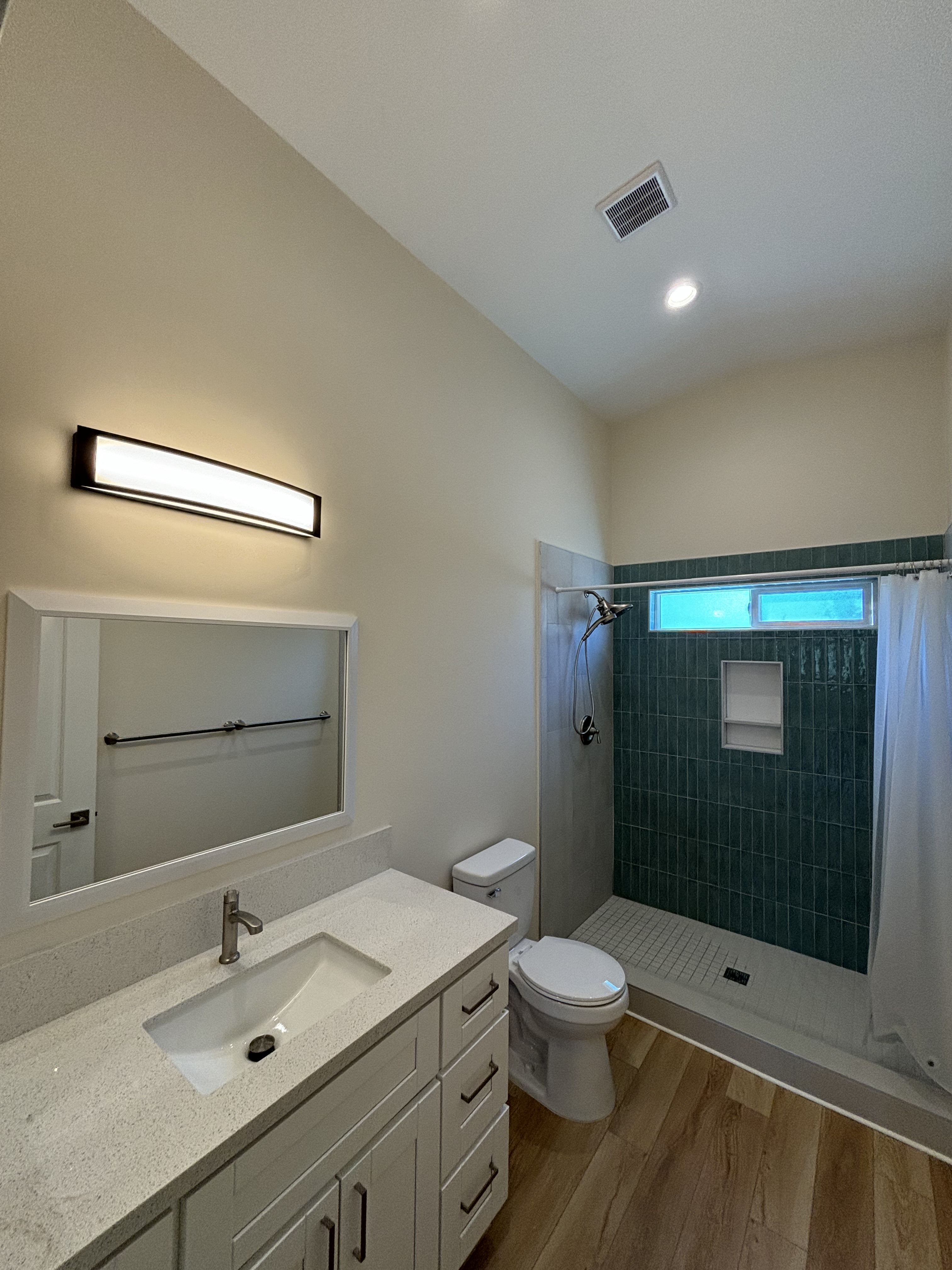
- Complete sanitation: a toilet, bathroom sink, tub or shower, and a kitchen sink with hot and cold water
- Sound structure: foundation, floors, walls, and roof in good condition
- Adequate heating, natural light, and ventilation
- No substandard conditions such as persistent dampness, pest infestation, visible mold, or general dilapidation
One important nuance: any work done after January 1, 2020 — a newer water heater, an electrical upgrade, a replacement heater — must meet current codes. The pre-2020 flexibility only covers what was originally built before the cutoff.
Step by Step: Legalizing a Unit in the City of San Diego
Here's how the process generally flows:
1. Get a confidential assessment
Have a licensed design professional or contractor walk the unit and flag anything that would count as substandard. This tells you what you're really dealing with before the City is involved.
2. Prepare your plans and documents
You'll need a site plan (address, parcel number, property lines, ADU location, setbacks, easements, and utility connections), floor plans (room dimensions, appliances, plumbing fixtures, heating, alarms, exits, and egress windows), the completed Attachment A checklist, and your construction-date evidence. If you're responding to a code enforcement case, include that case number.
3. Apply online
Submit a Building Permit application through the City's Development Services Department. In the scope of work, note that the project proposes to use the provisions of AB 2533.
4. Pay fees and complete review
Standard permit fees apply based on the City's fee schedule. Development Services reviews your submittal against the minimum standards.
5. Make corrections and pass inspection
After the permit is issued, inspectors verify that the unit isn't substandard. Any repairs identified earlier get completed and signed off here.
It's a manageable path, but it has a lot of moving parts — documentation, drawings, trades for any repairs, and inspection scheduling. That's exactly the kind of coordination our team handles. As a construction management agency, Casita brings in the right licensed professionals, keeps the paperwork organized, and keeps the project moving. You can see how we structure that work on our process page.
Why Legalizing Is Worth It
Bringing a unit into the light takes some effort, but the payoff is real:
- Peace of mind. You're no longer exposed to a complaint-driven enforcement surprise.
- Cleaner rentals. A permitted unit puts you on firmer footing as a landlord.
- Smoother sales and refinancing. Buyers, appraisers, and lenders tend to treat a permitted ADU very differently than an unpermitted room out back.
- Insurance clarity. It's much easier to have an honest conversation with your insurer about a legal dwelling.
And if the assessment shows the existing structure isn't worth saving, that's useful information too. Sometimes the smartest move is replacing it with a new ADU — and with today's streamlined rules, that can be more straightforward than many homeowners expect. Our services cover both paths, and our pre-approved plans can shorten the timeline if you decide to build new.
For the bigger statewide picture, California's Department of Housing and Community Development ADU resources, including the ADU Handbook, are a helpful reference.
Let's Take a Look Together
If you've got an unpermitted unit and aren't sure where you stand, you don't have to figure it out alone. Book a free site walk and we'll look at the unit with you, talk through whether it likely qualifies under AB 2533, and map out sensible next steps — whether that's legalizing what's there or starting fresh.
That backyard mystery can become a legal, comfortable home. With the right preparation, the path is clearer than it's ever been.